

Amid the relentless noise of modern life, a cozy space is a gentle embrace, an invitation to reflect and recharge.
Living small doesn’t have to mean sacrifice, especially when it comes to comfort and coziness. When you limit the size of your cabin or cottage, you still have plenty of design choices. If you want to shrink your new home’s size while amping up its cozy factor, read on for ideas and tips from design professionals.
Why Go Small?
The reasons to build a smaller cabin or cottage vary, according to Brett Youngstrom, co-owner of Yellowstone Log Homes (Rigby, ID). Sometimes code restrictions or the size of a lot dictate a smaller footprint. The smaller building may be a secondary structure to be used by a family member or as a short-term rental.
Budget can play a role in a cabin’s size, as well. “Everything costs more nowadays,” he says. And, if the cottage or cabin can serve as a vacation getaway, sometimes a smaller place is all that anyone needs.
No matter the reason to downsize your log cabin or cottage, there are tried and true ways to make it feel snug but still be comfortable and functional. Here are a few:
•Do double duty. To keep a cabin or cottage small and cozy, think about how interior spaces can serve more than one purpose. Could a guest bedroom double as a second living area? (Or could a daybed in the living area serve as a guest bed?) Consider a kitchen with a peninsula that works as the dining area.
Think about multifunctional furniture, like a dining table that can be set up without leaves for everyday use and expanded for a crowd (or an oversized jigsaw puzzle) when needed. A Murphy bed hides away during the day, leaving floor space open. Some models even convert to desks. Bench or banquette seating can offer storage space tucked beneath the seat cushions.
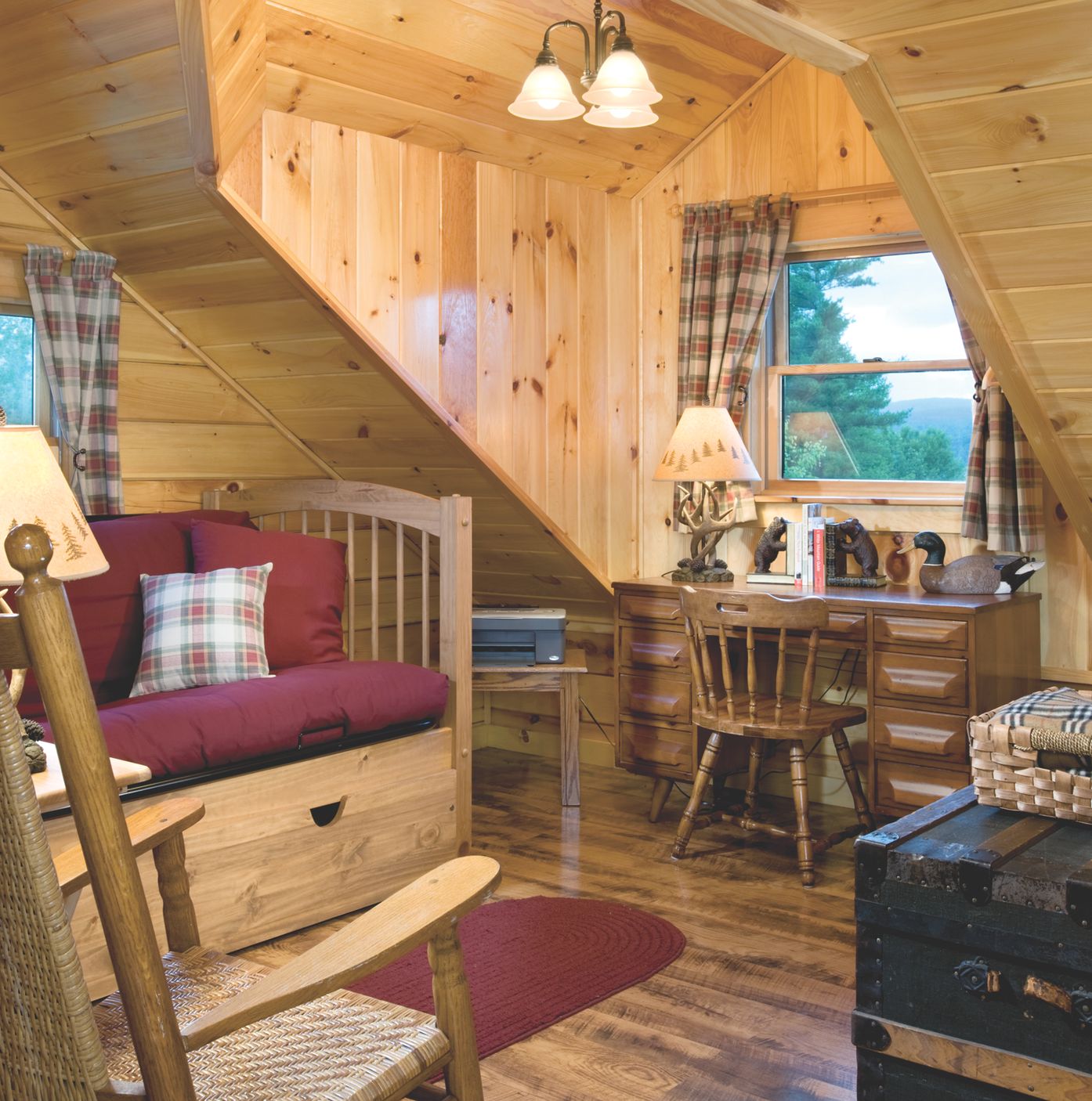
•Embrace openness. Windows and patio doors have great power to make a smaller space feel bigger while also boosting the cozy charm. Still, Jim Driesch, chief designer at WHS Homes (Claremont, NH) cautions against overdoing it with windows. “We’re seeing a lot more mid-century modern, contemporary type of style right now,” he says. These contemporary window configurations can span from wall to wall and floor to ceiling. “It can make a building feel too wide open and uncomfortable.”
When designing homes, Driesch aims to have natural light come into every room from at least two sides. “If that’s not possible, a good trick to play is to do a bump-out or a window seat that puts the window out beyond the framework of the room.” As an added bonus, window seats have a high “cozy quotient” because, as Driesch says, they become another smaller space you can spend time in.
An open concept floor plan is also a good way to make cozy spaces not feel too closed in. Giving a fireplace or woodstove a prominent position in an open space creates warmth, literally and visually.
In a cabin or cottage with an open floor plan, consider using posts to define spaces instead of walls so you don’t impede sight lines. Here again, the advice of a design professional is critical: Too much open space can make people who spend time there feel exposed, not sheltered.
•Get outside. What could be cozier than a screen porch on a rainy summer day or a front porch on a starry night? “I always encourage people to think of their house as not just what’s inside, but home is also what’s outside,” Youngstrom says. He suggests a simple roofline extension to create a covered porch area that’s protected and perfect for gathering people together. Adding an outdoor fireplace means you can use the space even on cooler nights. Wire the space for string lights, and you set the stage for the perfect cozy atmosphere.
•Cut the clutter. While comfortable seating and bedding make you feel cozy, too much clutter can lead to spaces feeling cramped. “If you have a lot of stuff, it’s going to be very tough to get into a small house,” Driesch cautions.
The advice applies not just to stuff but also to square feet. As you’re designing your cozy cabin or cottage, try to identify which spaces are essential and which you can live without. Oftentimes, it’s possible to shrink the size of bedrooms a bit since those spaces aren’t used throughout the day.
•Keep proportion in mind. If you’re building with logs, be aware of their size in relation to the home’s size. “I encourage people to keep wall log diameter in proportion,” Youngstrom says. By holding wall logs to 6, 7 or 8 inches in diameter, you’ll still get the warm, cozy look and feel of wood without losing too much floor space to larger logs.
•Mix in a bit of magic. Novelty is delightful, and design elements that are unexpected can add to your cabin or cottage’s cozy character. Youngstrom mentions a setup you might not see every day: Bunk beds for a guest room that include a full- or queen-size bed with a bunk above, creating a special spot for a small family.
Consider using time-worn furnishings or finishes like reclaimed wood flooring or barn siding for their unique, casual and warm feel. Take time to choose special lighting fixtures inside the cabin and around the outside to provide a warm glow in the evening. Old-fashioned cupboard or box beds create curtained rooms within rooms and are especially appealing to kids.
On the Cozy Bandwagon
Small cabins and cottages give you an opportunity to do something really fun, Youngstrom says, and to bring loved ones together to enjoy each other. In big spaces, he says, it’s “easy to get distracted by screens; you take some of that way when you’re closer together.” Driesch agrees: “Cozy is comfortable and easy to be in,” he says. “You don’t have to have a gigantic home to have a nice place.”