
The planning stage of your project is the best time to value engineer.
Building a custom log, timber frame, or hybrid home is an exciting opportunity! But it’s also one of the largest financial investments most people will make in their life. Fortunately, saving money doesn’t have to mean cutting corners. With careful planning and smart decision-making, you can keep costs under control while still creating a home that reflects your style and stands the test of time.
EMBRACE VALUE ENGINEERING
Value engineering is a collaborative process where you and your builder look for ways to reduce costs without sacrificing quality or aesthetics. “Finish selections such as foundation finishes, roofing selections, flooring, cabinetry, countertops, fixtures, play a critical role in the overall project costs so be open to changing selections to cut costs, and bring the project within budget,” says Mathew Sterchi, vice president at StoneMill Log & Timber Homes (Knoxville, TN).
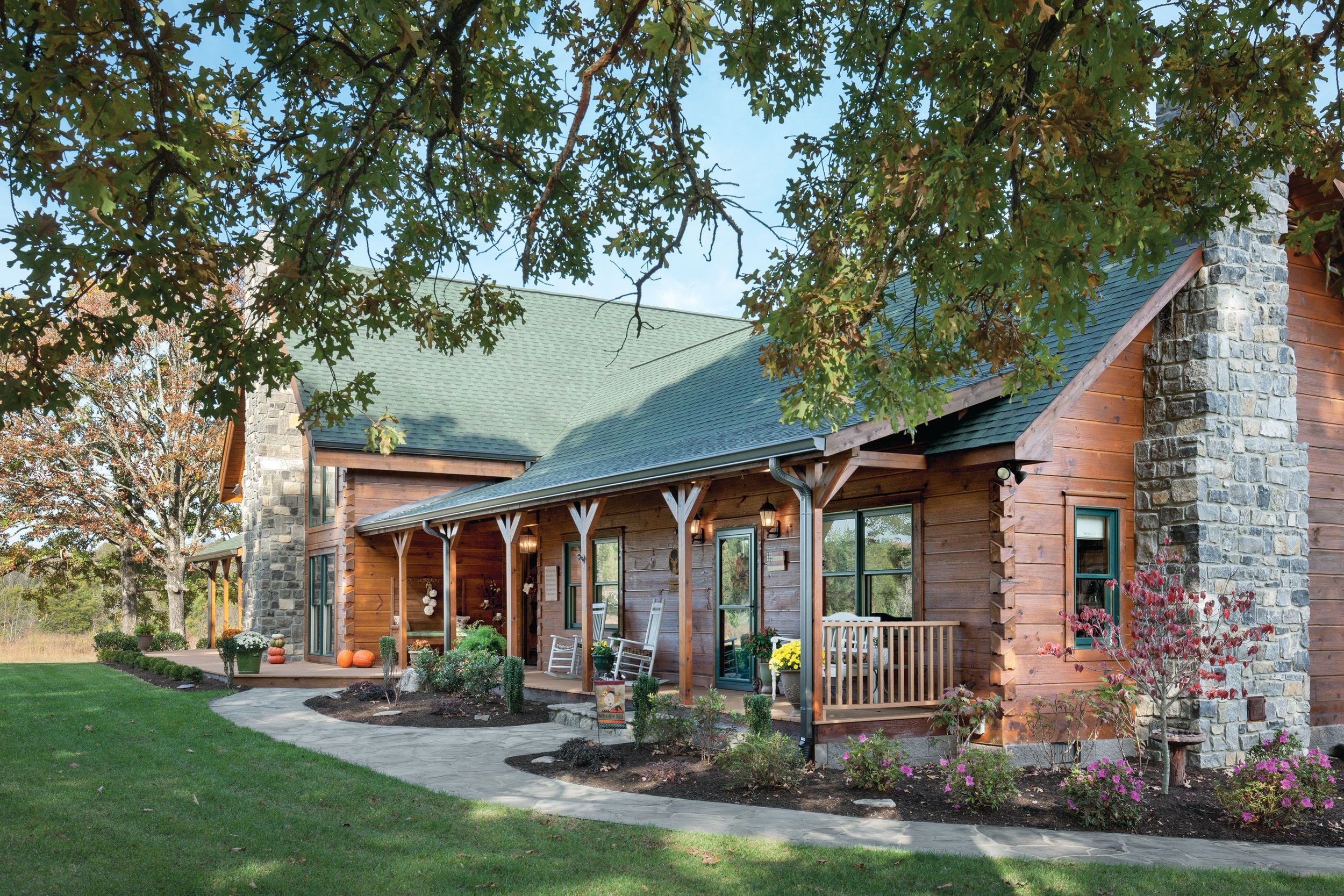
This can be as simple as choosing to plant grass seed over buying sod. Alternatively, choosing local stone over expensive imports, or opting for simple roofline while maintaining curb appeal. The goal is to make strategic substitutions and design adjustments that deliver the same function and beauty at a better price point.
DEVELOP A REALISTIC BUDGET
Before you fall in love with a specific design or floor plan, work with your builder and lender to determine what you can comfortably afford. “Starting the design and budgeting process early helps identify project budget numbers and determine what design and specification changes need to be made before construction begins to keep the project within budget,” Mathew says.
In addition to construction costs, it’s wise to include site prep, permits, landscaping, furnishings, and a contingency fund of 10–15 percent. A realistic budget from the start avoids costly surprises later.
CHOOSE THE RIGHT SITE CAREFULLY
Raw land can hide expensive surprises. Things such as rocky soil, steep slopes, or issues with utility access can all add significantly to your bottom line. Spending a little more for a build-ready lot often saves thousands in the cost of excavation, grading, and engineering.
“Topography and infrastructure can help homebuyers save money. The more level the property, the more money that can be saved on excavation, grading, foundation work, and foundation finishes,” Mathew says.
Buying land with some or all of the utilities and infrastructure (power, water, septic, driveway, etc.) in place can eliminate some of the cost unknowns. The drilling of a well or installation of a septic system before starting construction can also help control costs.
KEEP THE DESIGN EFFICIENT
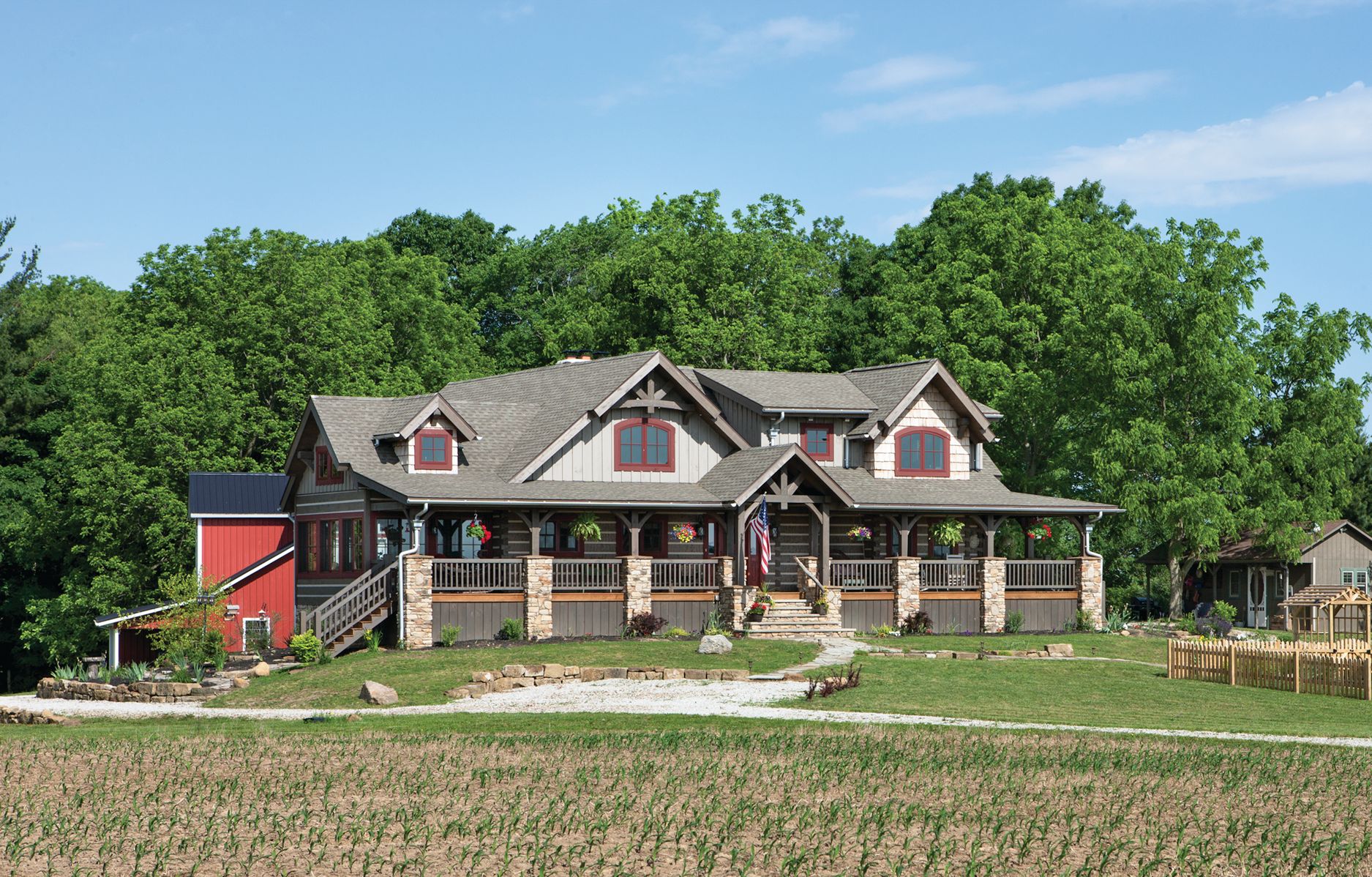
Every corner, dormer, or complex roofline will add time, and labor. A compact, well-proportioned floor plan with a simple roof structure is both beautiful and cost-effective. Open-concept layouts common in log and timber-frame homes allow you to create spaciousness without extra square footage.
CONSIDER A HYBRID APPROACH
If your dream includes soaring timber trusses but your budget doesn’t stretch to a full timber frame, consider a hybrid design. Using timber frame features in high-impact areas—such as great rooms, kitchens, dining areas, porches, and decks—paired with conventional framing elsewhere, can capture the look you love while reducing costs.
PRIORITIZE ENERGY EFFICIENCY
Energy-efficient windows, doors, and robust insulation may add to upfront costs, but these will save you money every month for decades. Log and timber-frame homes naturally offer thermal mass advantages, and pairing them with smart technology, such as efficient HVAC systems, makes your home even more affordable to live in.
SOURCE MATERIALS WISELY
Work with your builder to take advantage of package deals from log and timber-frame producers. Buying materials in bulk, using locally sourced wood, or even reclaiming beams and timbers for accent features can stretch your dollars while adding character.
BE STRATEGIC WITH FINISHES
Because this is likely your “forever home,” it’s tempting to splurge everywhere. But not every surface needs to be top-of-the-line. Invest in high-impact areas—like a statement fireplace or custom kitchen cabinets—and save in others by choosing quality, mid-range materials. You can always upgrade finishes later.
SWEAT EQUITY COUNTS
If you’re handy, consider taking on projects such as staining, landscaping, or installing interior trim. Just be realistic. Taking on too much DIY work while you are already working a full-time job can slow the project down, and cost more than professionals performing that work.
WORK WITH EXPERIENCED PROS
The cheapest bid isn’t always the best. Experienced builders who specialize in log and timber frame homes know how to avoid costly mistakes and keep your project on schedule. Their knowledge often saves you more in the long run than what you might “save” with an inexperienced crew.
AVOID CHANGE ORDERS
Many contractors regard change orders as a profit center. It is advisable to avoid these additional costs unless it’s essential. “Change orders in the field can be costly,” Mathew says. “Stick with the plan, and finishes selected during the design and final budgeting phase.”
PLAN FOR THE LONG TERM
Think about the home’s lifetime costs, not just the initial build. Durable materials, protective finishes, and thoughtful design choices reduce maintenance and replacement costs—saving you money for years to come.
Your log or timber home is more than just a structure—it’s the realization of a dream. By balancing smart financial decisions with inspired design, you can create a home that delivers beauty, comfort, and value for generations without breaking the bank.