
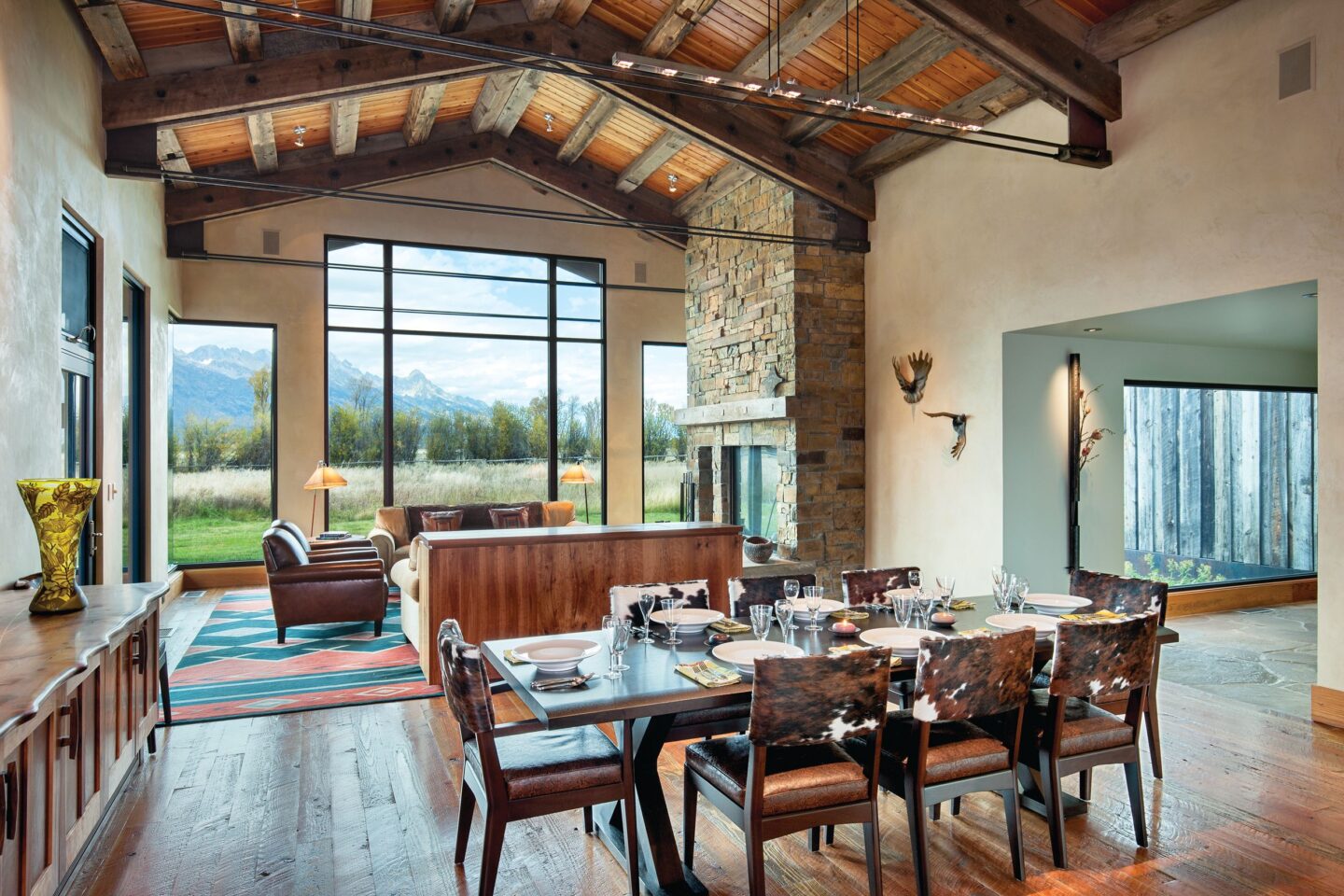
The blending of wood, stone, glass, and steel into serene living.
It’s a descriptive term that is open to interpretation. Whether “rustic chic” or “modern rustic” is the preferred label, the result is always intriguing. The possibilities of combining the cozy, country charm of a log or timber home with the elegance and style of other design perspectives are endless.
“I see more modern rustic which is applied to interior and exterior design aesthetics,” notes Diana Allen, an architect with Woodhouse: The Timber Frame Company (Mansfield, PA). “It’s blending natural wood finishes like live edge wood slab tables or reclaimed farm tables that seat 12 with high-end kitchens and the latest appliances—or chunks of wood like 14 inches deep by 24 inches wide that are used for floating counters in the powder room and vessel sinks placed on top with slate tile walls and floors and open shelves below.
“This allows the feel of ‘spa retreats’ with towel rolls and candles to create specific calm areas,” Diana says. “It exploded during COVID when everyone started spending all day in their homes—the desire to return to nature and need to have spaces we could retreat to and recharge from the uncertain times. Primary baths and yoga rooms all use these textures.”
The idea of rustic chic runs the gamut of imagination and taste. Its design philosophy brings together the warmth and inviting spirit of the rustic feel along with the sleek, smooth appeal of more modern accents, fixtures, and surroundings. Extending throughout the interior and to the exterior living spaces of log or timber frame homes, rustic chic may well be more than one of those trends that explode on the design scene and then diminish in a few months or years. It is likely to be with us for the long term, expanding and widening the perspective of the homeowner, architect, and designer alike.

“The good news for log and timber lovers is our home style just by the nature of what we build with makes achieving the modern rustic aesthetic very easy,” says Diana. “Wood used to express the structure is one of the main tenets of this style trend, the blending of wood, stone, glass, and metals into calm, serene landscapes.”
For the outdoor endeavor in rustic chic or modern rustic, Diana suggests an imaginative convergence of varied materials that complements the natural environment. “Low decks in deep rich wood tones that hover over the ground without railings and that lead to large expanses of glass blending interior and exterior spaces work well,” she advised. “Vertical wood siding burned to form a char—Shou Sugi Ban—forms a dark exterior finish that instantly elevates a home’s calm grounded feel.”

The sweep of complementary color, both inside and out, can bring a harmonious look and feel to life, while contrasting hues work in similar ways to draw the eye to incredible vibrance and intriguing combinations. “Using the same color palette on the interior as well as the exterior work to visually expand the spaces from inside when looking outward can work well,” Diana says. “Large roof overhangs supported with metal brackets and standing seam roofing accents complete the palette. Barndominiums draw heavily on this style to bring the agrarian barn into this century, which might be the reason that modern chic is so popular! I’m not sure about that, but I feel like this is where the roots of it come from. Just my take.”
Certainly, rustic chic or modern rustic stretches across time, space, visualization, and materials integration. One element complements another, and in essence, the feeling of a bygone era is awakened while the current and modern perspectives are enhanced. The utility and gracious implementation of rustic chic or modern rustic décor helps designers to expand their horizons, pulling together diverse elements that might otherwise never have been considered as partners in an overall aesthetic. Such design efforts stretch from the structural elements to the appliances, arrangement of interior spaces, and to the furnishings, from bedroom to bath, loft to living areas, and outdoor seating and ambiance.
Be advised, however, that such adventures in design require a willingness to delve beyond the ordinary, the tried and true, and the basics of a total commitment to either end of the design spectrum. Along with the desire to achieve the rustic chic or modern rustic aesthetic, considerable investment is required. These investments extend from the pocketbook—chic isn’t necessarily cheap—to the daring and bold, even to the limits of creativity and imagination.

“Modern rustic is not a low-cost item,” says Diana. “This style tends to be a higher price point. Obviously, with inclusions such as full wall backsplashes of marble slabs or back-lit onyx in kitchens and baths mixed with rough-sawn floating shelves, and Wolf appliances, the price points get high quickly.”
Where is the essence of rustic chic or modern rustic best conceived and brought to life? From a professional standpoint, Diana offers, “I would say timber frame works best with this style. We can create a covered porch deep enough for seating groups and supported with perimeter timber posts and beams. Whether it’s a front or rear covered porch doesn’t matter as this item fits directly with expectations of this style. Once blended with the dark siding and large glass walls and some metal roofing, you are halfway to fulfilling the desired aesthetic.”
Considering the fusion of rustic and modern elements leads to an endless array of possibilities for both log or timber frame homeowners and designers. While its appeal may be limited for some, others fully embrace its extraordinary versatility. Bringing diverse elements together may often result in newly discovered visual perspectives, and points of view that can only be achieved when there is a willingness to push the design envelope, welcome diverse design components, and dare to make a bold and lasting statement.