
Designing a legacy home is all about providing nurturing spaces that can accommodate people of all ages and abilities, both now and in the future.
When a family began planning a 3,000-square-foot legacy home on a golf course outside Knoxville, Tennessee, they imagined some special spaces inside. “They incorporated a puzzle room, a game room and a dedicated space for children to play,” says Mary Beth Smith Brown, the senior designer for Natural Elements Homes who designed the house.
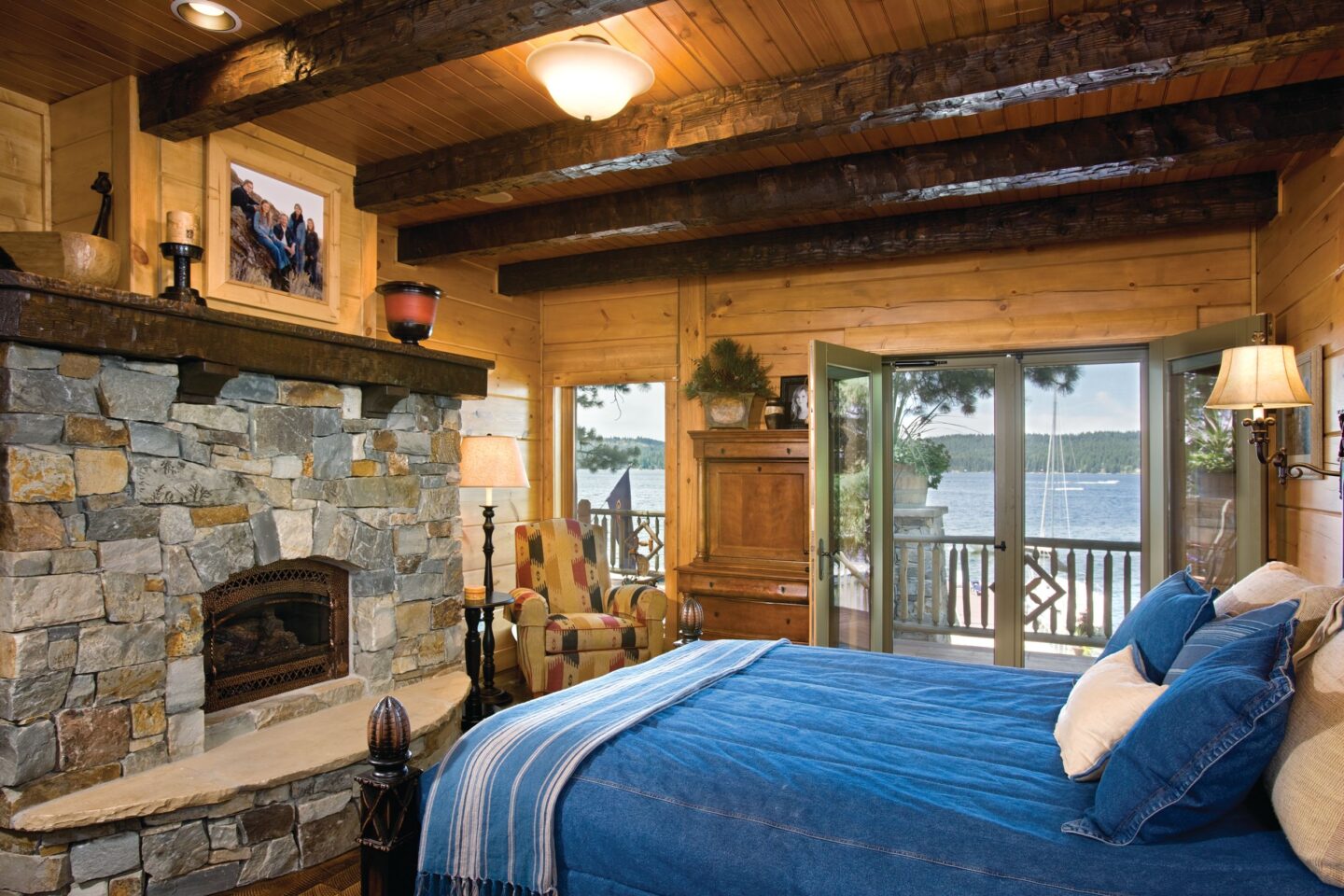
A primary bedroom with a view was the treasured space in a legacy home that caught the attention of Zachary Parmeter at Golden Eagle Log Homes. The client wanted to be able to gaze out at the stars at night and wake up to see the lake every morning.
Defining a Legacy
For homebuyers like these, building a legacy home entails creating a place that will be passed down through generations; where an older couple may use it for their primary home, but the desire is for extended family to spend time there, as well, to visit or vacation.
Designing this type of home encompasses a slightly different mindset, Zachary explains. “They don’t plan on selling it. They plan to keep it and pass it down to the next generation,” he says. It also focuses attention on the quality of time spent in the home. “How could it be a legacy home without memories being made?” he says. “Relationships and shared experiences are what create those memories.”
So how do you intentionally provide for treasured spaces that nurture relationships and make room for memories to be made?
It Starts With the Site
“That land will drive the sentiment.” Zachary says clients have the sense that they “need to live up to how special the property is.” Legacy homeowners may be building on land that’s already been in the family for generations. They may even be replacing a family home or cabin that just isn’t meeting their current needs.
Oftentimes a view or a location near water drives the decision to build a legacy home and influences its design. Any room inside a home or outdoor living area that captures a view can feel like a treasured space.
“When you have an incredible view, you’re going to want lots of windows. Usually, hallways will not be on the view side,” Zachary explains. Common areas like the great room and dining room are prime spots for enjoying views. Kitchens can take in views, too, especially in open-concept layouts.

Nurturing Relationships
When it comes to families, togetherness is important, but so is the opportunity to step away. A legacy home’s design can easily fill both of those needs. When you think about shared spaces, keeping the vibe casual can be a helpful goal, Zachary says.
For that reason, the kitchen island can serve as a treasured space. He suggests making it large enough to seat at least four people and leaving plenty of space for traffic to flow around it. “Islands create an easy way for people to come and go much less formally … children can pop in and leave,” he explains.
Mary Beth agrees that kitchens are often treasured spaces where families interact. “Having a kitchen large enough to work together and share the preparation of family meals and grandma’s recipes,” she says, along with a dining space big enough for extended families to eat together is important.
Another casual spot where people can either gather or escape gatherings is a screened porch or covered outdoor area. Zachary notes that a porch is often a treasured place to read on a summer day, take a nap or chat.
The design phase is the time to consider who will be using the home and what treasured spaces for different people might look like. “When people have a reserved, private space for themselves in what is meant to be a shared family home, it’s important,” Mary Beth says. For children, it might be a dedicated bunk in a bunk room with six beds. “Having even a tiny spot to call your own in the middle of a big, shared home can make you feel like you belong, an insider.”
For parents or grandparents, first-floor areas might be designed for aging in place. Trying to stay flexible and imagine the needs of future generations isn’t always easy, but can lead to a design with flex spaces, like a defined dining room that could morph into an office, a game room or even a guest bedroom down the line.

The Treasure of Traditions
Memories often involve family traditions around holidays or local activities. Part of the fun of designing a legacy home is using those traditions to inform spaces inside the home.
A waterfront home might call for a place where sandy feet can be rinsed or you can easily grab a cold drink just inside the house. “In Northern and Western climates, we have clients who build ski rooms so they have reserved space for bulky clothing and equipment storage for snow skiing,” Mary Beth says.
If the grandchildren enjoy doing puzzles or everyone gathers for evening card games, a separate room or at least a designated area with a table can become a treasured space. “We have families incorporate music rooms, libraries and hearth rooms so there are purpose-built areas to encourage togetherness and shared activities,” she says.
Some places you can plan ahead for but not invest in immediately: Maybe the design calls for an eventual addition if that’s needed by later generations. Or maybe the plan would include a separate but integrated outbuilding like a bunkhouse or an additional cottage. Keeping those things in mind can help you thoughtfully place treasured spaces in the house. Maybe the firepit where the kids make s’mores could be placed in a spot that would also be accessible to a future bunkhouse.
Of course, memories and relationships extend beyond human family members, Mary Beth says. “An increasing number of people include pet rooms and devoted kennel space to ensure that pets are part of the family experience.”
Legacy Materials
What goes into building a legacy home helps treasured spaces endure. “Our clients focus on quality materials because the idea is to build a home that will last for generations,” Mary Beth says. “They choose designs that will stand up to changing styles, with a focus on quality and craftsmanship.”
“Building a legacy prioritizes being problem free, reducing headaches for the future,” Zachary says. His clients may justify the additional expense of long-lasting materials because they want the home to endure. “A lot of our clients love the ideas of challenging themselves creatively, having unique and special things,” he says. Logs and timbers fit the bill perfectly. “Even when you’re gone, what you’ve done has an impact on future generations.”